2026 World Cup Review: Spain Triumphs Amidst Controversies and Innovations
The 2026 World Cup, hosted across the United States, Mexico, and Canada, concluded with Spain emerging as champions after a final described as a “dismal, awful affair.” The tournament, which featured an expanded format of 48 teams for the first time, was marked by both on-field drama and off-field controversies, ranging from political interventions to ticketing issues and organisational challenges.
Gianni Infantino, Fifa president, had boldly claimed the event would be the “biggest event in the history of mankind.” The expansion to 48 teams allowed nations like Curacao, Cape Verde, Jordan, and Uzbekistan to make their debuts. Cape Verde, a small archipelago, notably secured draws against Spain and Uruguay. Curacao also earned a point against Ecuador after a significant loss to Germany, while DR Congo drew with Portugal and progressed from their group.
Tournament Controversies and Organisational Issues
The tournament faced several controversies, including high ticket prices, which led to an investigation by attorneys general in New York and New Jersey regarding pricing practices and seat accuracy. Despite concerns about empty seats, Fifa reported near-full capacity at 99.7% with a record 6,527,410 fans attending matches after the quarter-finals. Fifa also generated additional revenue through a secondary resale platform, adding 30% in fees to each sale. Initial bans on supporters bringing water bottles into grounds were reversed following public backlash, and high transportation costs in New Jersey and Boston were also adjusted.
Political issues also permeated the event. The treatment of Iran, whose team was permitted entry into the country for only 24 hours around each of their three fixtures, was described as scandalous. US immigration policies also prevented supporters from several nations from entering the country, and Somali referee Omar Artan was refused entry at Miami Airport. A significant incident involved Folarin Balogun, whose suspension was overturned. This decision raised questions about political interference.
Organisational challenges were also noted, with some venues, such as Houston and Atlanta, being welcoming, while others experienced some of the worst basic organisation and facilities in at least six World Cups.
On-Field Action and Innovations
The football itself was described as good, though not exceptional. Several dramatic games occurred, particularly in the last 32 and last 16 rounds, including Brazil v Japan, Morocco v the Netherlands, England v Mexico, Argentina v Cape Verde, Norway v Côte d’Ivoire, Belgium v Senegal, Norway v Brazil, and Argentina v Egypt. The quarter-finals were less inspiring. Argentina’s semi-final victory over England was thrilling, but Spain’s win against France was described as too easy, with Spain quickly establishing superiority.
New seeding policies were implemented to prevent top-ranked teams from meeting early in the knockout stages. Argentina, England, France, and Spain were given special status to be drawn into separate quarters of the draw. To ensure Argentina and Spain could not meet before the final, Fifa swapped Argentina into Group J and France into Group I. This meant England would have played France in the semi-finals, with Argentina facing Spain, making an Argentina–Spain final impossible without the swap.
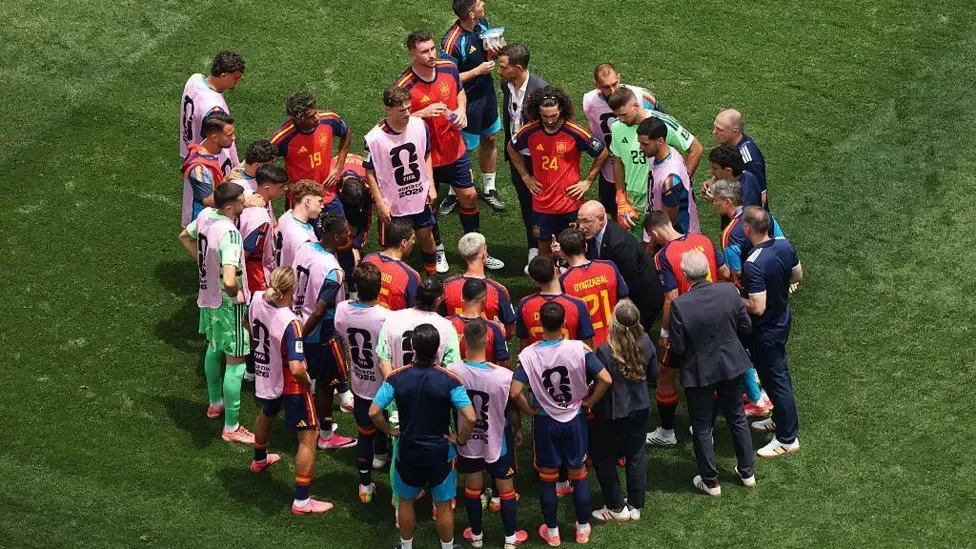
Mandatory three-minute hydration breaks were introduced in every match, regardless of conditions, ostensibly for player welfare. These breaks allowed broadcasters to air commercials, with ad slots on Fox Sports in the US reportedly costing between $200,000 and a higher amount, rising to a significantly higher amount during USA matches and the final stages. Coaches used these breaks for tactical discussions, influencing the course of several matches. While Uefa has ruled out similar breaks, their return in future World Cups is not unexpected.
Pierluigi Collina, Fifa’s head of referees, implemented new laws to improve game tempo, focusing on quicker throw-ins, goal-kicks, and substitutions, and reducing delays from apparent injuries. The average match length, excluding hydration breaks, was 96 minutes 24 seconds, with a ball-in-play time of 58 minutes 15 seconds. This resulted in the game being played for 60.4% of the match length, an increase from 57.4% in the 2022 World Cup.
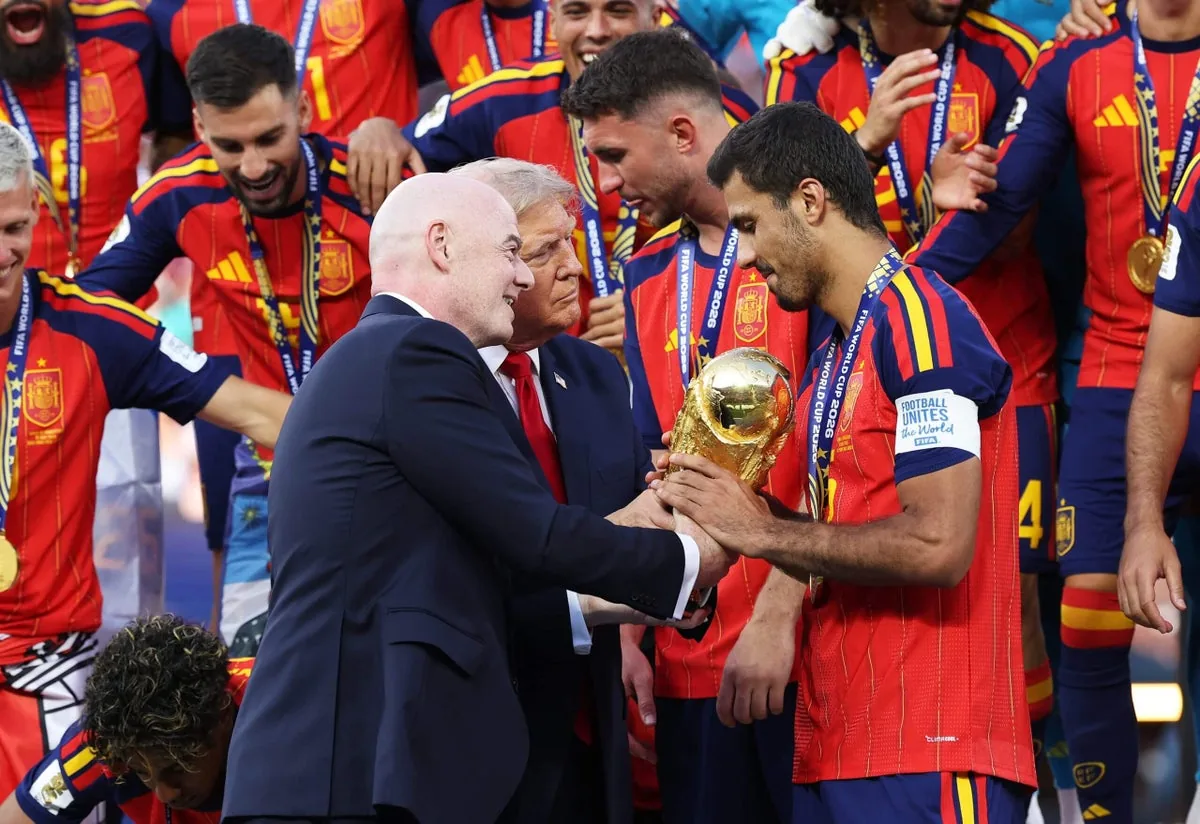
The final saw Spain defeat Argentina, with Spain being widely regarded as the best team, demonstrating consistency and dominance throughout the tournament. Lionel Messi was frequently cited as the best player, despite being described as anonymous in the final until the last five minutes of extra time. Other notable players included Kylian Mbappe, Rodri, Jude Bellingham, and Pau Cubarsi. One of the most exciting games mentioned was Mexico 2-3 England, described as great theatre due to altitude trepidation, a storm delay, and the match’s melodrama.
Read Also
Source: theguardian.com