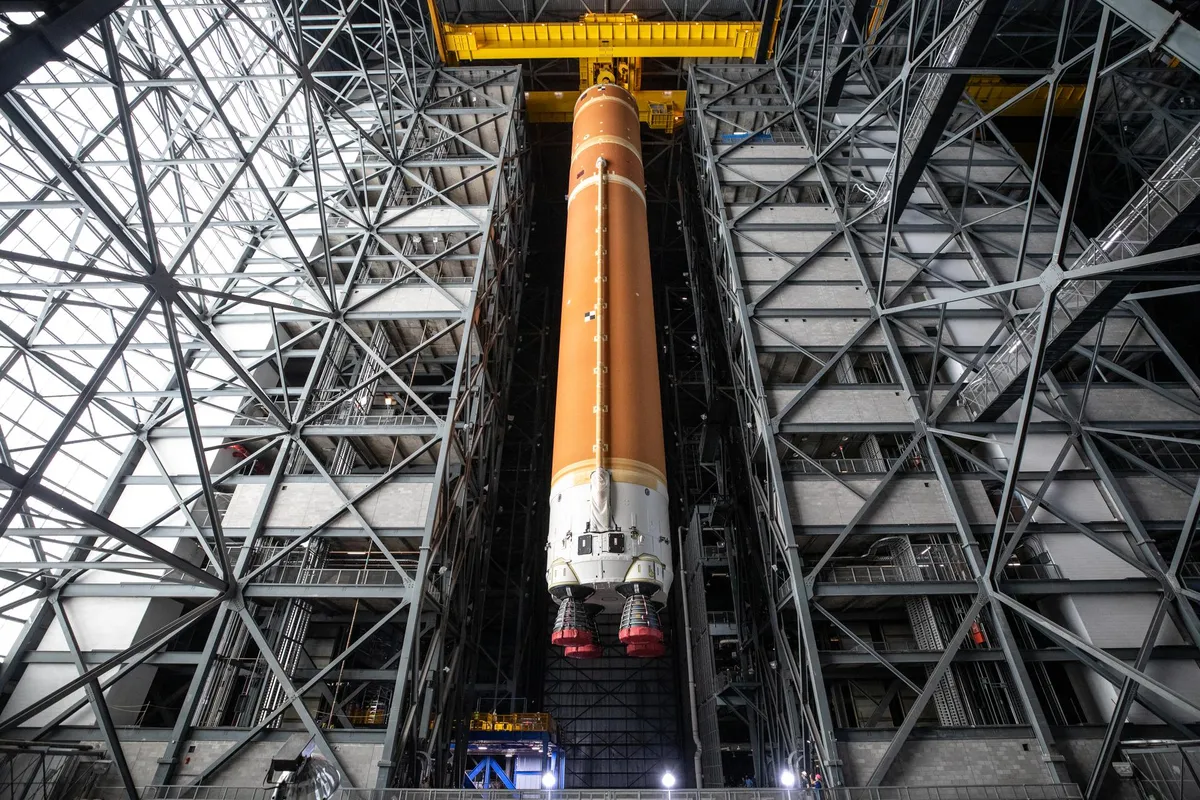
Artemis II Launch: A Historic Return to the Moon
What the data shows
The Artemis II launch raises a pivotal question: How will NASA’s upcoming mission reshape human exploration of the Moon and beyond? Scheduled for January 17, 2026, this mission will send four astronauts around the Moon for the first time in 50 years, marking a significant milestone in space exploration.
The Artemis II mission will utilize the Space Launch System (SLS) rocket and the Orion spacecraft, which are designed to support deep-space missions. The crew, consisting of Reid Wiseman, Victor Glover, Christina Koch, and Jeremy Hansen, will circle the Moon over a duration of 10 days. This mission is particularly notable as it represents the first crewed mission under the Artemis program, which aims to establish a sustainable human presence on the Moon.
NASA’s last crewed lunar mission occurred in the 1970s, and since then, the agency has focused on robotic exploration and the International Space Station. The Artemis II mission is a critical step in testing systems for returning astronauts to the Moon and paving the way for future human exploration of Mars. As Scott Pace, a prominent figure in NASA’s planning, stated, “We’re about to send humans in orbit around the Moon again.” This sentiment encapsulates the excitement surrounding the mission.
The launch countdown will begin approximately two days before liftoff, incorporating both ‘L Minus’ and ‘T Minus’ times. During this countdown, the launch team will conduct a series of preparations and checks to ensure the mission’s success. The performance of the solid rocket boosters on launch is a key focus, as highlighted by Pace, who noted, “The first thing is the performance of the solid rocket boosters on launch.”
As the countdown progresses, the mission will not only serve as a test of technology but also as a demonstration of international collaboration in space exploration. Canadian astronaut Jeremy Hansen’s inclusion in the crew underscores the global interest in lunar exploration and the potential for future partnerships in space endeavors.
Looking ahead, the Artemis II mission will set the stage for subsequent missions, including Artemis III, which aims to land astronauts on the lunar surface. However, details remain unconfirmed regarding the specific objectives and timelines for these future missions.
In summary, the Artemis II launch represents a historic return to lunar orbit, with significant implications for the future of human space exploration. As NASA prepares for this monumental event, the world watches closely, eager to witness the next chapter in humanity’s journey beyond Earth.