Gold Jewellery from 7th Century England Acquired by Lincoln Museum
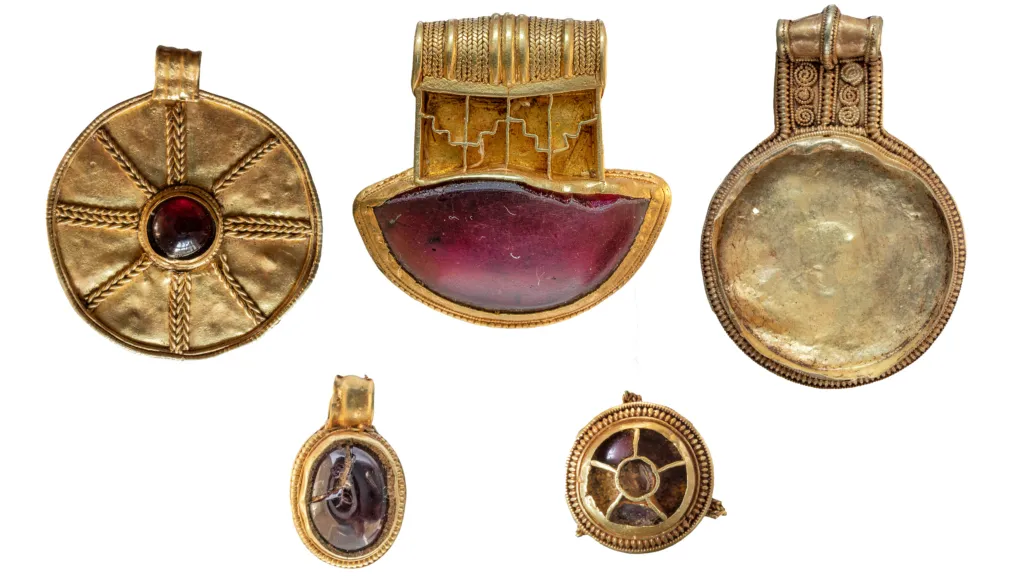
The Lincoln Museum has recently enhanced its collection with the acquisition of a stunning group of gold and garnet jewellery, supported by the Beecroft Bequest. This collection, consisting of five pieces from the 7th century, exemplifies the intricate craftsmanship of Anglo-Saxon goldsmiths.
The jewellery includes a domed garnet-set boss and four pendants from high-status necklaces, all of which were discovered buried in plough soil by two metal detectorists. The pieces are remarkably well preserved, exhibiting only minor damage and loss, which is a testament to their historical significance.
The combination of garnet and gold is characteristic of the period, with the largest pendant featuring an unusually large scallop-shaped garnet and cloisonné-stepped cells. Additionally, a disc-shaped pendant retains its central garnet setting, adorned with intricately plaited gold filigree, highlighting the sophistication of the craftsmanship.
Notably, the gold and garnet boss may be part of a composite disc brooch, a rare find in Lincolnshire. This acquisition not only enriches the museum’s offerings but also serves to engage the community and protect these invaluable items for future generations.
Dawn Heywood, a representative from the museum, remarked, “This stunning jewellery, which spent over a thousand years buried in the earth, will be the centrepiece of new displays in our permanent archaeology gallery.” This statement underscores the importance of the collection in showcasing the region’s historical narrative.
Lincoln Museum, which holds over two million archaeological objects, continues to play a vital role in preserving and presenting the rich history of the area. The new jewellery display is expected to attract significant interest from both locals and visitors alike.
As the museum prepares for the unveiling of this remarkable collection, observers anticipate that it will not only enhance the understanding of Anglo-Saxon burial practices but also inspire further research and community involvement in archaeology.