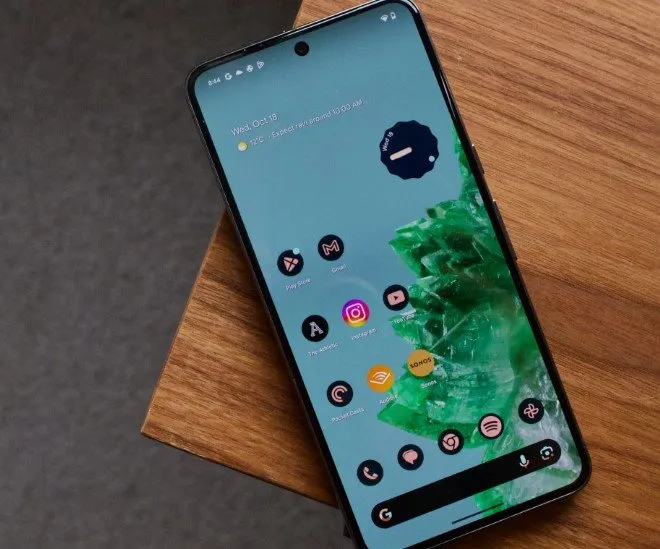
Google Photos AI Scanning: Gemini AI Accesses Your Library
Google has introduced a major update enabling Gemini AI to access users’ Google Photos library. This change allows the AI to create personalized images using actual photos from users, enhancing the overall user experience.
According to Google, “By connecting your Google Photos library to Personal Intelligence, Gemini goes a step further than just understanding your interests.” This indicates a shift towards more tailored content based on individual user data.
Importantly, Google claims it does not train its AI models directly on users’ private photo libraries. Users retain control over their data; they can turn off Gemini’s access through the app settings if they choose to do so. This feature is crucial as privacy concerns continue to rise in the digital age.
In a related development, companies like Tinder and Zoom are introducing eye-scanning technology to combat AI impersonation. Users can scan their irises to earn a “proof of humanity” badge on these platforms. So far, 18 million people have been verified through World ID, which is part of Tools for Humanity co-founded by Sam Altman.
This verification process has become increasingly important as an estimated 30% of Tinder profiles are believed to be AI-enhanced scams. Last year alone, romance scams resulted in losses amounting to $1 billion in the US.
Looking ahead, financial fraud through deepfake scams is projected to reach $40 billion in the US by 2027. As the digital landscape evolves, ensuring user authenticity and combating scams will remain paramount for tech companies.
Yet, despite these advancements, users must remain vigilant about their data privacy. As stated by an anonymous source, “Users will keep control of their data by default,” reinforcing the importance of user agency in this new technological landscape.
The introduction of Gemini AI and eye-scanning technologies illustrates a significant shift in how tech companies are approaching personalization and security. As Sam Altman noted, “I’m not afraid for the future as long as we can tell between the two.” This sentiment reflects both optimism and caution as we navigate an increasingly complex digital world.