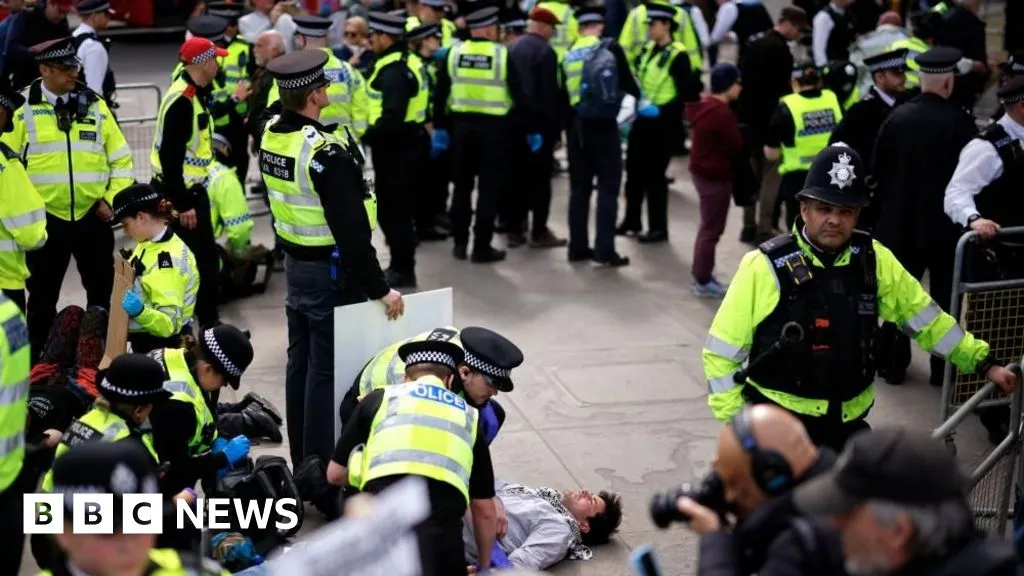
Police Arrest 212 During Vigil in London Amid Controversy
On April 11, 2026, a significant vigil in Trafalgar Square, London, culminated in the arrest of 212 individuals, marking a stark contrast to prior expectations of peaceful demonstration. The event drew an estimated 1,500 participants, who gathered to express their dissent against the UK government’s recent classification of Palestine Action as a terrorist organization. This classification, made in July 2025, placed Palestine Action alongside groups such as al-Qaeda and Hezbollah, igniting widespread criticism and concern over free speech.
The decisive moment came when the Metropolitan Police intervened, leading to the mass arrests that spanned a diverse age range from 27 to 82. This action was unexpected, as many attendees believed the vigil would proceed without incident. The police’s approach has been described as heavy-handed, with demonstrators expressing feelings of being targeted rather than protected. One demonstrator remarked, “I think Britain has now descended into a non-democratic situation and I think that is very dangerous [for] free speech.” This sentiment underscores the growing unease regarding the balance between law enforcement and civil liberties.
In the immediate aftermath, the arrests have sparked outrage among activists and civil rights advocates. The High Court had recently ruled on February 13 that the government’s proscription of Palestine Action was unlawful, a decision that many believed would lead to a more lenient approach from law enforcement. However, with the UK government’s appeal against this ruling scheduled for April 28 and 29, tensions remain high. The police’s actions at the vigil have raised questions about their role in upholding democratic values versus enforcing government mandates.
Meanwhile, across the Irish Sea, An Garda Siochana has also ramped up enforcement against fuel-cost protesters, indicating a broader trend of police action against civil unrest. The Commissioner of An Garda Siochana has stated that illegal activities by fuel protesters are endangering the State, reflecting a similar narrative of law enforcement prioritizing state stability over individual rights. This parallel situation highlights a growing trend of police crackdowns on protests, raising alarms about the implications for democratic engagement.
As the situation unfolds, the impact on the parties involved is significant. Activists are now more determined to challenge the government’s stance, while the police face scrutiny over their methods and the implications of their actions on public trust. Justin Kelly, a spokesperson for the protesters, declared, “We will not tolerate this any longer,” signaling a potential escalation in activism against perceived governmental overreach.
The backdrop of these events is a complex interplay of legal rulings, government actions, and public sentiment. The UK government’s classification of Palestine Action has been met with fierce opposition, and the recent High Court ruling was seen as a victory for civil liberties. However, the police’s response at the vigil has cast a shadow over this victory, raising critical questions about the future of protest and free speech in the UK.
Experts warn that the current trajectory could lead to further polarization between the government and civil society. The arrests at the vigil may serve as a catalyst for increased activism, as individuals rally against what they perceive as an infringement on their rights. As the appeal against the High Court ruling approaches, the stakes are high for both the government and the activists, with the potential for significant legal and social ramifications.