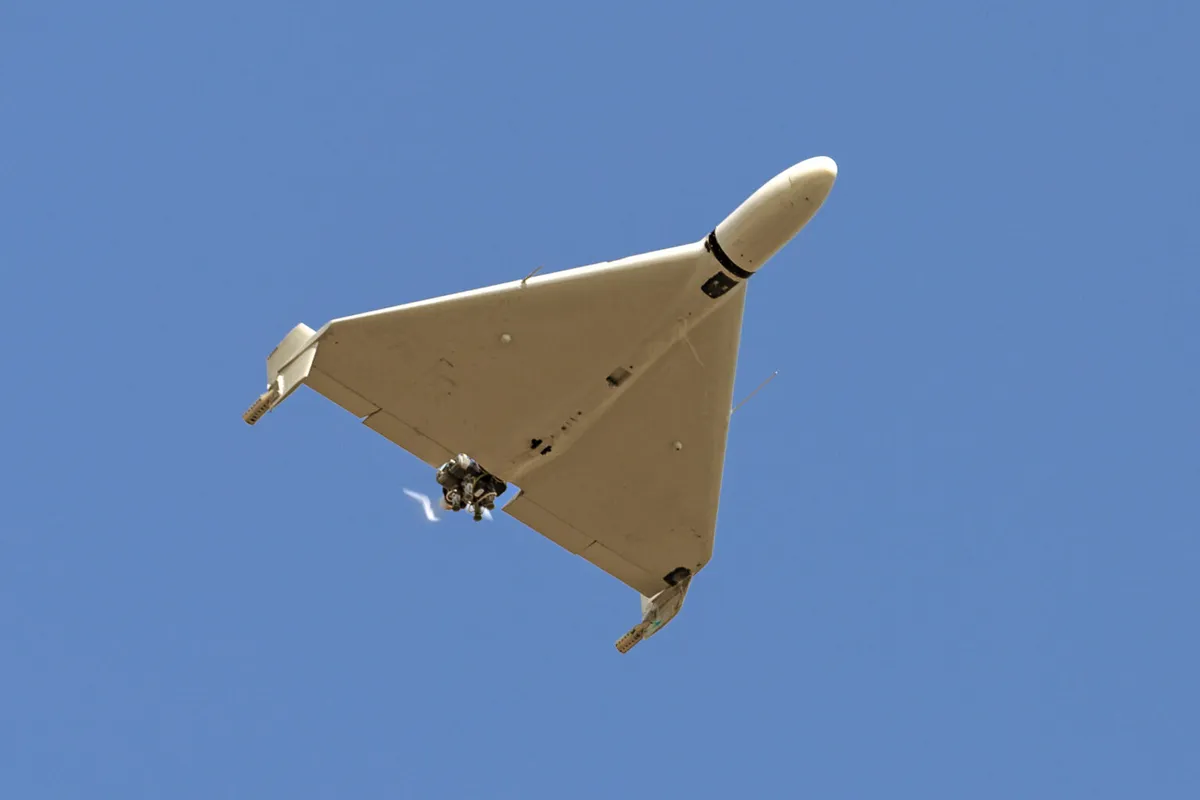
Shahed Drones: Ukrainian Defense Advances Against New Threats
Ukrainian interceptor drones boast a remarkable 95% success rate in destroying Russian Shahed attack drones. This statistic illustrates the effectiveness of Ukraine’s defensive measures against these unmanned aerial vehicles. As of now, Ukrainian forces have successfully eliminated 184 Shahed drones, with a notable peak of 20 drones
Shahed-type drones are equipped with SIM cards from the Russian mobile operator Tele2. Each drone’s connectivity plays a crucial role in its operational effectiveness. However, roaming for these SIM cards is blocked in Ukraine, limiting their functionality within Ukrainian airspace. Yet, when flying near borders, these drones can access roaming services from Belarusian, Polish, or Romanian operators. This situation complicates interception efforts as drones can maintain communication and guidance while evading Ukrainian defenses. A Ukrainian pilot recently set a world record by downing two Russian Shahed drones from an impressive distance of 500 kilometers. This achievement underscores the advanced capabilities of Ukrainian forces in drone interception. Interceptor drones can launch within approximately 30 seconds, allowing for rapid response to incoming threats. The ability to conduct real-time tracking while airborne enhances their effectiveness significantly. The emergence of a private air defense unit marks a significant development in Ukraine’s military strategy. For the first time, this unit shot down a high-speed ‘jet-powered’ Shahed-type drone traveling at speeds exceeding 400 kilometers per hour. Mykhailo Fedorov commented on this advancement, stating, “This is a new level of complexity.” The private air defense initiative began in early March 2026 and aims to supplement existing military capabilities. In Kharkiv, the first company participating in this program has successfully shot down both Shahed and Zala drones. Their involvement demonstrates the growing importance of private entities in national defense efforts. The program UNITE – Brave NATO focuses on developing technology to counter drone threats and improve navigation under electronic-warfare conditions. The ongoing conflict has led to an evolution in how air defenses are structured within Ukraine. With private air defense units becoming more prevalent, traditional military resources are being supplemented by innovative approaches to combat emerging threats. This shift reflects not only technological advancements but also strategic adaptations to an evolving battlefield. Despite these successes, challenges persist. A Ukrainian pilot known as ‘Hulk’ remarked on the difficulty of maintaining such high interception numbers amidst increasing complexity in drone operations: “It’s extremely difficult to achieve that kind of number now.” This sentiment captures the ongoing struggle against sophisticated aerial threats. As Ukraine continues to adapt its strategies and technologies, observers will be watching closely to see how these developments unfold. The integration of private air defense units into national security frameworks could redefine engagement rules in modern warfare.