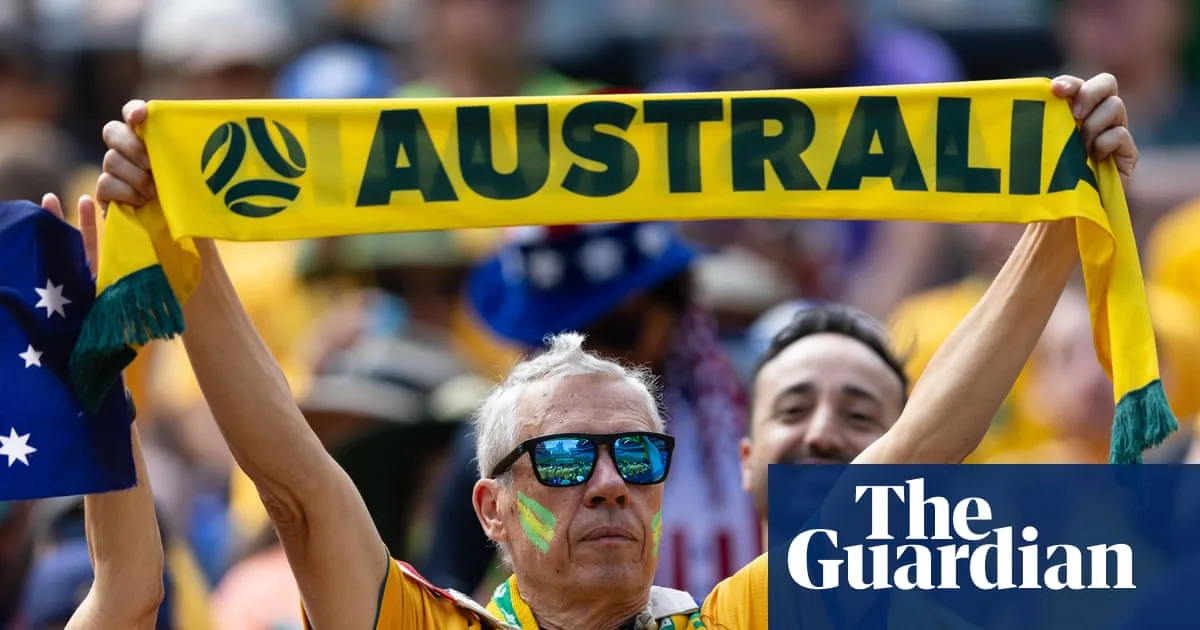
Australia v Paraguay: Socceroos match could be a major milestone for broadcaster
The upcoming World Cup match between the Socceroos and Paraguay is seen as a significant event for Australian football, as the team aims for qualification to the knockout rounds for only the third time. For broadcaster SBS, the game holds even greater importance, potentially setting a new audience record.
This fixture marks the culmination of 11 straight men’s World Cup tournaments for SBS, with its commitment to coverage dating back to Mexico 1986. The audience for this match is anticipated to approach or surpass the network’s highest viewership for any Socceroos game or World Cup fixture.
Ken Shipp, SBS director of sport, stated that the match is very likely to achieve the largest audience ever for an SBS World Cup broadcast. He attributed this potential success to both the current broadcast team and the foundational work of past figures.
Broadcast Evolution and Audience Engagement
Ken Shipp, a veteran executive involved in nine World Cup tournaments, has overseen the evolution of SBS’s coverage. This year’s broadcast is described as a 2026 extravaganza, offering free-to-air television, SBS On Demand streaming, highlights, mini-matches, and social media content. For the first time, the streaming service allows users to restart a match while it is in progress.
Shipp acknowledged the contributions of football broadcast pioneers Les Murray and Johnny Warren, noting their belief in the potential for Australian football. He expressed hope that the match would “stop the nation,” citing favourable timing, extensive media coverage, and excitement surrounding the young Australian team.
Past viewership figures include an average audience of 3.4 million for the World Cup qualifier against Uruguay in 2005, and just over 3 million for the last-16 match against Italy in 2006. More recently, the Socceroos’ victory over Turkey drew an audience of just over 3 million, while a match against the USA, screened at 5am on the east coast, attracted almost 2.2 million viewers.
The Matildas set a modern Australian television audience benchmark with 7.13 million viewers for their 2023 Women’s World Cup semi-final against England, benefiting from a prime-time kick-off and widespread national interest.
Broadcast consultant Jon Marquard highlighted the strong interest leading into the tournament, attributing it to what he described as potentially the best Australian team since the 2006 “Golden Generation” and convenient time zones. He added that winning the first game further boosted interest.
The current SBS World Cup broadcast team features presenters Niav Owens and Claudio Fabiano. They are supported by former Australian representatives Harry Kewell, Lydia Williams, Tommy Oar, and Andrew Redmayne, as well as former Ghana international Kevin-Prince Boateng.

Shipp noted the diverse lineup of football experts, chosen to reflect modern Australia and the global football community. Engagement with World Cup content on SBS social media accounts has doubled the organisation’s pre-tournament goals. SBS has also experimented with showing the initial minutes of some matches live on TikTok before directing viewers to other platforms.
Despite changes in broadcast rights, with Paramount and Network 10 holding rights for the 2027 Women’s World Cup and the broadcaster for the 2030 men’s tournament yet to be decided, SBS has maintained its standing among football fans. Chants of “S-B-S” were heard in Vancouver before the Socceroos’ match against Turkey, which Shipp described as a testament to fan appreciation for SBS’s role in popularising football in Australia over 40 years.
Cultural Connections in Paraguay
In a small farming town in Paraguay, roughly 130 kilometres from the nation’s capital, Australian flags are visible. This rural commune, known as Nueva Australia, was founded by Australians in 1893, and its historical ties to Australia remain evident in the surnames of some residents, such as Smith, Kennedy, Adams, and Murray.
When Paraguay faces Australia in the final Group D match of the 2026 World Cup on Friday, the town will experience a unique cultural dynamic. While locals will support their national team, known as La Albirroja, the area’s Australian heritage will add a distinct element to the game.
Soel Gonzalez, who owns an equine therapy farm in Nueva Londres, an adjacent town, believes many current residents of Nueva Australia still share a cultural affinity with Australians, despite language differences. Some residents prepare Australian foods, and many welcome Australian travellers.
However, when it comes to World Cup allegiances, the approximately 4,500 residents of Nueva Australia primarily identify as Paraguayans. Gonzalez noted that the town’s connection with Australia largely extends to a general curiosity about a distant country.
The settlement of Nueva Australia originated from a group of labourers who sought to establish a socialist utopia. This venture followed the Great Shearers’ Strike of 1891, which failed to improve working conditions. William Lane, a radical socialist, led a group of over 200 shearers, stockmen, and unionists from Sydney to Paraguay in 1893, after the Paraguayan government offered 75,000 hectares of free land to migrants.
Lane’s strict rules, including prohibitions on alcohol and relationships with local women, led to tensions, and the socialist experiment eventually collapsed. In May 1894, Lane and 58 others established a new camp called Cosme, but this second attempt also failed. Lane left the endeavour five years after departing Australia, returning to journalism in New Zealand. Many other Australians, including poet Mary Gilmore, returned home.
The Paraguayan government eventually dissolved the cooperative, granting each settler their own land. Despite the end of the socialist dream, thousands of Paraguayans today can trace their ancestry to the colony. The match will kick off at a time when the sun is high over Australia, but it will be approaching midnight in Nueva Australia.
Temperatures are expected to drop below zero at 11pm, when the match begins. Gonzalez plans to watch the game with a glass of whiskey and a traditional Paraguayan asado lamb barbecue, a contrast to the founding tenets of the settlement. He stated that while the town will be cheering for Paraguay, they anticipate a challenging match against the Socceroos, acknowledging Australia’s technical growth, with the Paraguayan coach expecting to face the fastest team in the World Cup.
Read Also
Source: theguardian.com