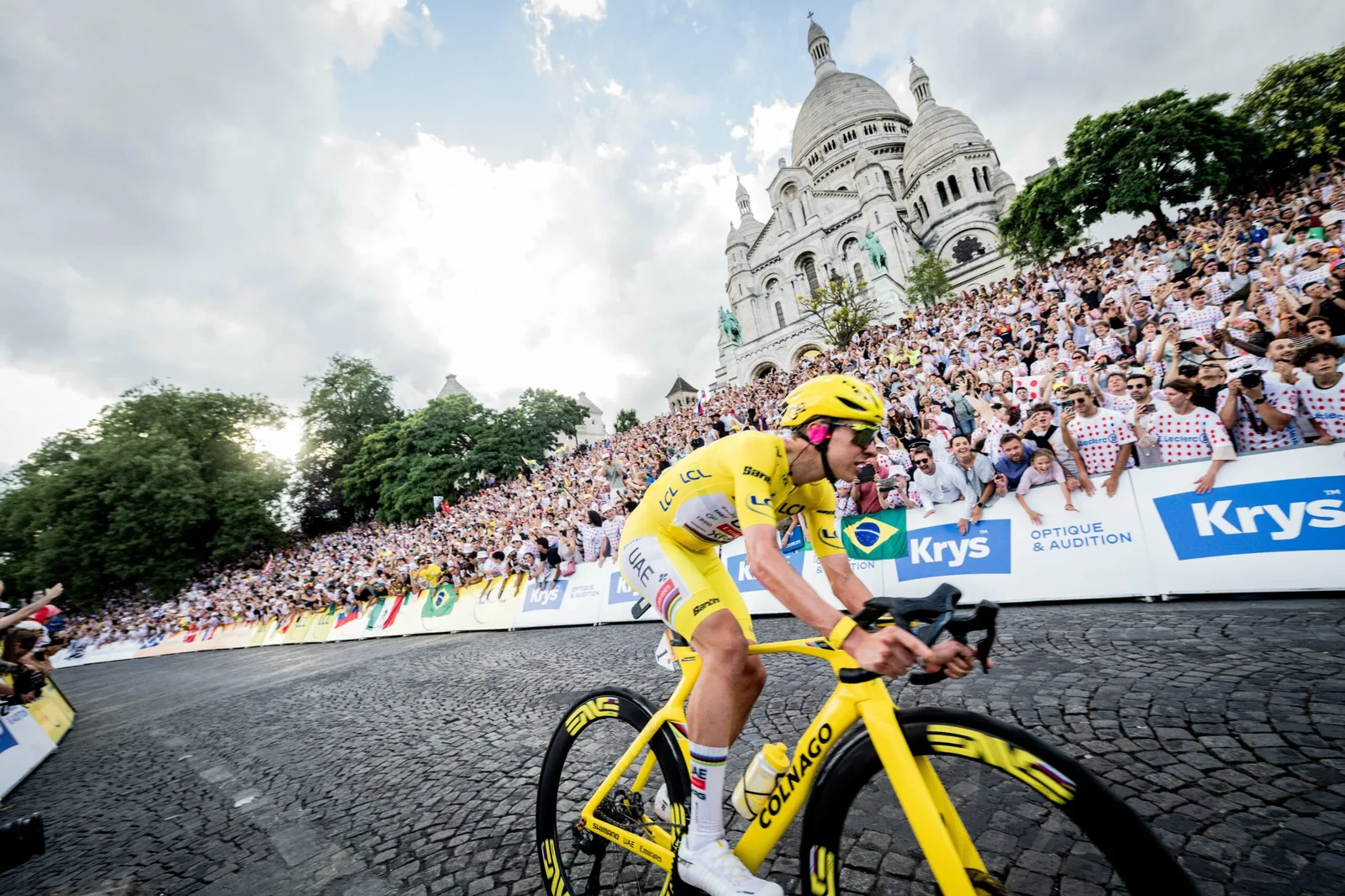
Paris: Pogacar secures fifth Tour de France victory
Pogacar’s Dominance and Historical Context
Tadej Pogacar, at 27 years old, has become the youngest cyclist to achieve five Tour de France victories, matching the record held by cycling legends Jacques Anquetil, Eddy Merckx, Bernard Hinault, and Miguel Induráin. His latest win concluded on the Champs Élysées, marking his third consecutive triumph in the event. This achievement has led many to consider him among the sport’s greatest, potentially surpassing figures like Merckx.
Pogacar’s dominance was evident throughout the race, including a record-breaking ascent of Alpe d’Huez during stage 19, where he secured one of his five stage wins. Over his five Tour victories, he has spent nearly 9,500km in the yellow jersey, an extraordinary feat given he first took the lead in his inaugural Tour win in 2020 on the penultimate day. His average speed of 41.99kmh is also noted as faster than any other five-time winner, with more mountain stage victories to his name. These figures, however, are also seen to reflect advancements in technology, equipment, and athlete training, alongside changes in race structure such as shorter stages and increased rest days.
The Slovenian rider’s career includes victories in many major races, such as the Tour of Flanders, Giro d’Italia, Milan-San Remo, Road World Championships, Giro di Lombardia, and Liège-Bastogne-Liège. His mother, Marjeta, suggested he might continue at his current level for another 10 years, indicating his sustained commitment to the sport. Despite his success, some fans have expressed frustration that his performances are so far ahead of his peers, potentially diminishing the competitive edge of the sport.
Team Success and Emerging Talents
UAE Emirates XRG, Pogacar’s team, also celebrated significant success, winning €832,750 in prize money. His teammate, Isaac del Toro, joined Pogacar on the Paris podium by finishing third overall and securing the white jersey for the best young rider. Del Toro’s performance was notably aided by Pogacar, who at times sacrificed his own potential stage victories to help consolidate Del Toro’s position, including during the ‘queen’ stage to Alpe d’Huez.
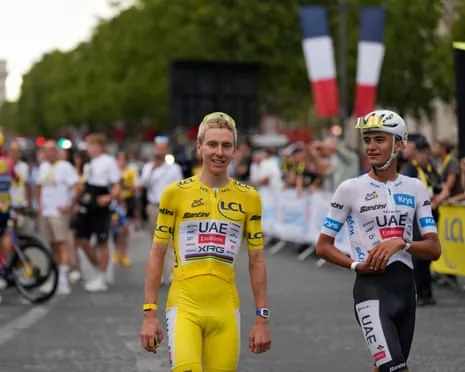
French cyclists experienced a mixed Tour. While there were no home stage wins for only the third time in the event’s history, three French riders finished in the top 10: Paul Seixas, Lenny Martinez, and Jordan Jegat. Seixas, a 19-year-old rider, finished fourth in the general classification despite starting the Tour recovering from a June crash and a cold. He expressed disappointment at missing the podium but found motivation in Pogacar’s performance, stating it provides a clear vision for his own future aspirations to win the Tour.
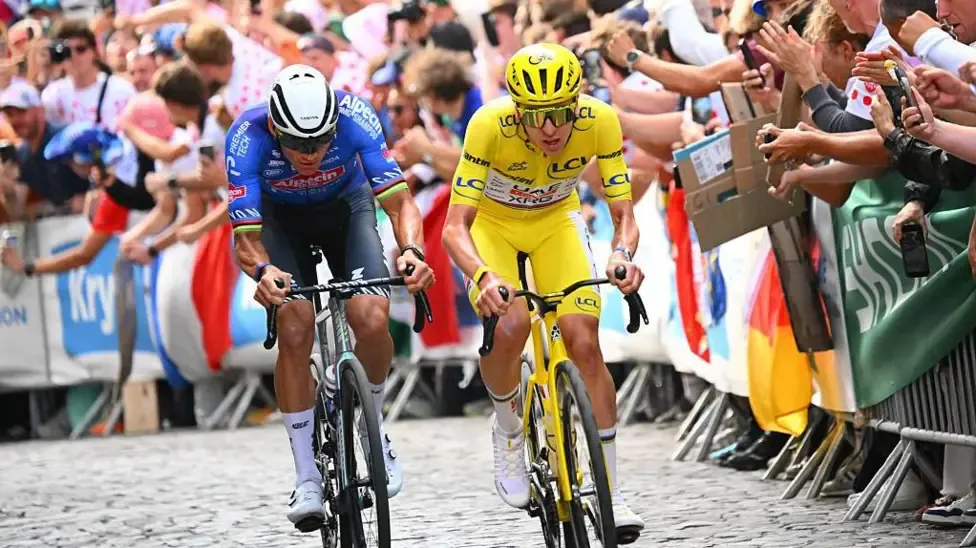
Other notable performances included Richard Carapaz of EF Education-Easypost, who claimed the king of the mountains’ polka dot jersey after winning stages 18 and 20. Mads Pedersen of Lidl-Trek secured the green points jersey, winning stage four and consistently collecting mid-stage points. The final stage in Paris was won by the Netherlands’ Mathieu van der Poel of Alpecin-Premier Tech, who charged to victory on the cobbled climb over Montmartre, narrowly beating his teammate Jasper Philipsen.
Challenges and Future Outlook
The Tour was not without its challenges, including the abandonment of Jonas Vingegaard, who crashed out on stage 15 after breaking his collarbone. Vingegaard, a past winner of the Tour in 2022 and 2023, had been subjected to a nocturnal anti-doping test by the International Testing Agency (ITA) at 2am, a practice that also affected Pogacar at 5am. These rare night tests, conducted under “exceptional circumstances,” sparked speculation, though no results have been made public.
Pogacar is expected to confirm his participation in the Vuelta a España, which is scheduled to begin in Monaco on August 22. The future plans for Vingegaard remain uncertain following his crash. The sport continues to grapple with the perception surrounding serial winners, with some media outlets highlighting that maintaining credibility for the Tour and its champions presents a challenge greater than any record. This year’s Tour de France was recorded as the fastest in the race’s history, averaging 43.326kph over its 3,321km, surpassing the previous year’s average by 0.5kph.
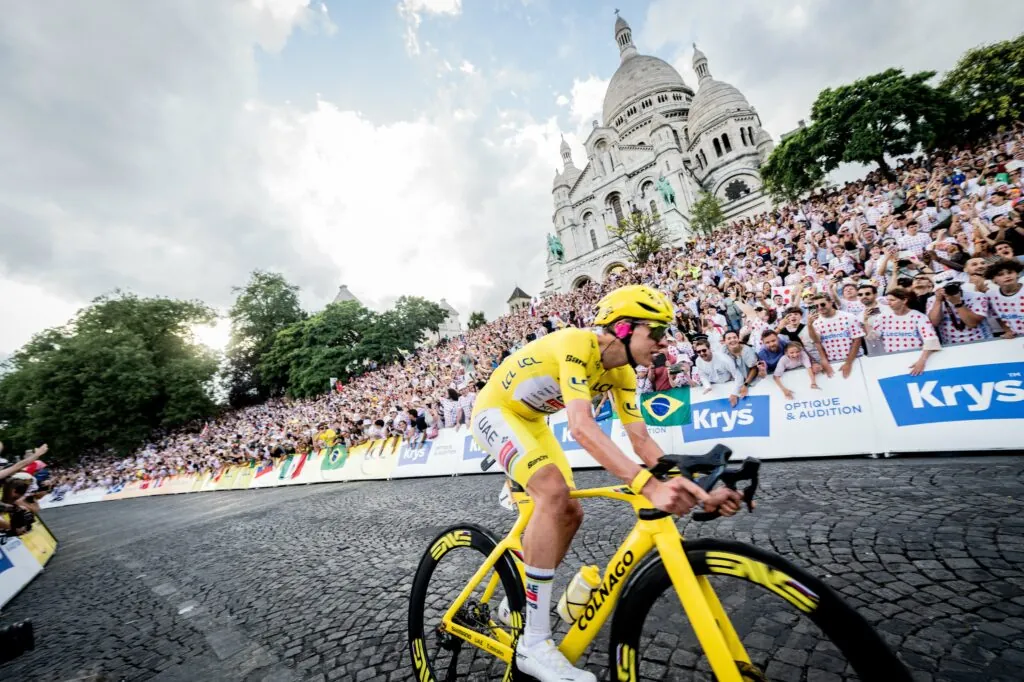
The increased speeds are attributed to advancements in bicycle technology, including improved components, tyres, helmets, and frame designs. Additionally, significant progress in training methodologies and athlete nutrition are cited as key factors. The collective level of the peloton is also noted as exceptionally high, with many riders now achieving times that were previously considered records. For instance, on the Col du Tourmalet, at least 10 riders surpassed Vingegaard’s best time from two years prior. The final stage was reduced from 133km to 89km due to the redirection of emergency services to address wildfires in south-west France.
Source: theguardian.com