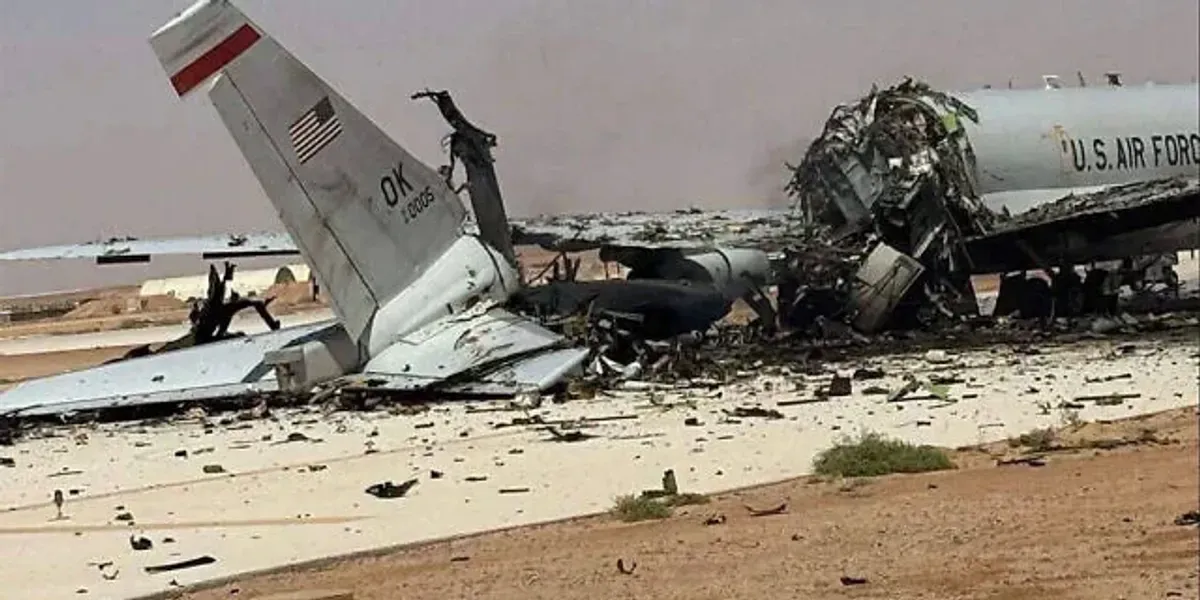
US radar jet destroyed in Iranian strike on Saudi base
How it unfolded
On March 30, 2026, a significant escalation occurred in the ongoing tensions between the United States and Iran when an E-3 Sentry aircraft was completely destroyed at Prince Sultan Air Base in Saudi Arabia. This attack involved at least one missile and 29 drones, marking a notable increase in the aggressiveness of Iranian military operations in the region.
The E-3 Sentry, known for its real-time surveillance and command capabilities, has been a critical asset for the US Air Force since it first entered service in 1977. However, the destruction of this aircraft, tail number 81-0005, operated by the 552nd Air Control Wing, is particularly alarming as the US Air Force now has only 16 E-3 Sentry planes remaining. The production of these aircraft ceased in 1992, making them irreplaceable in the short term.
At least 12 American military personnel were injured in the attack, with five suffering serious injuries. The implications of this strike are profound, as it not only affects the operational capabilities of the US military but also raises questions about the security of American forces stationed in the region.
Air Force Colonel John Venable emphasized the gravity of the situation, stating that the destruction of the plane is a “huge deal” given the limited number of E-3s in America’s arsenal. This incident highlights the vulnerability of US military assets and the potential for Iran to continue undermining the network of early warning systems established over decades.
Andreas Krieg, a defense analyst, noted that Iran is gradually eroding the capabilities that the US has built up in the region. This attack is a clear demonstration of Iran’s intent to challenge US military presence and influence in the Middle East.
Retired U.S. Army Lt. Col. Daniel Davis expressed concern over the current state of US military operations, stating, “We’re not doing OK at all.” This sentiment reflects a growing unease among military analysts regarding the effectiveness of US strategies in countering Iranian aggression.
The E-3 Sentry model is expected to remain operational with the USAF until 2035, but with the current losses, the sustainability of this fleet is now in jeopardy. The US operates just 17 E-3 aircraft, down from 32 in 2015, indicating a significant reduction in surveillance capabilities over the years.
As the situation develops, the ramifications of this attack will likely influence US military strategy in the region. The destruction of the E-3 Sentry not only represents a tactical loss but also serves as a stark reminder of the ongoing threats posed by Iran. Details remain unconfirmed regarding future military responses, but the incident underscores the precarious balance of power in the Middle East.