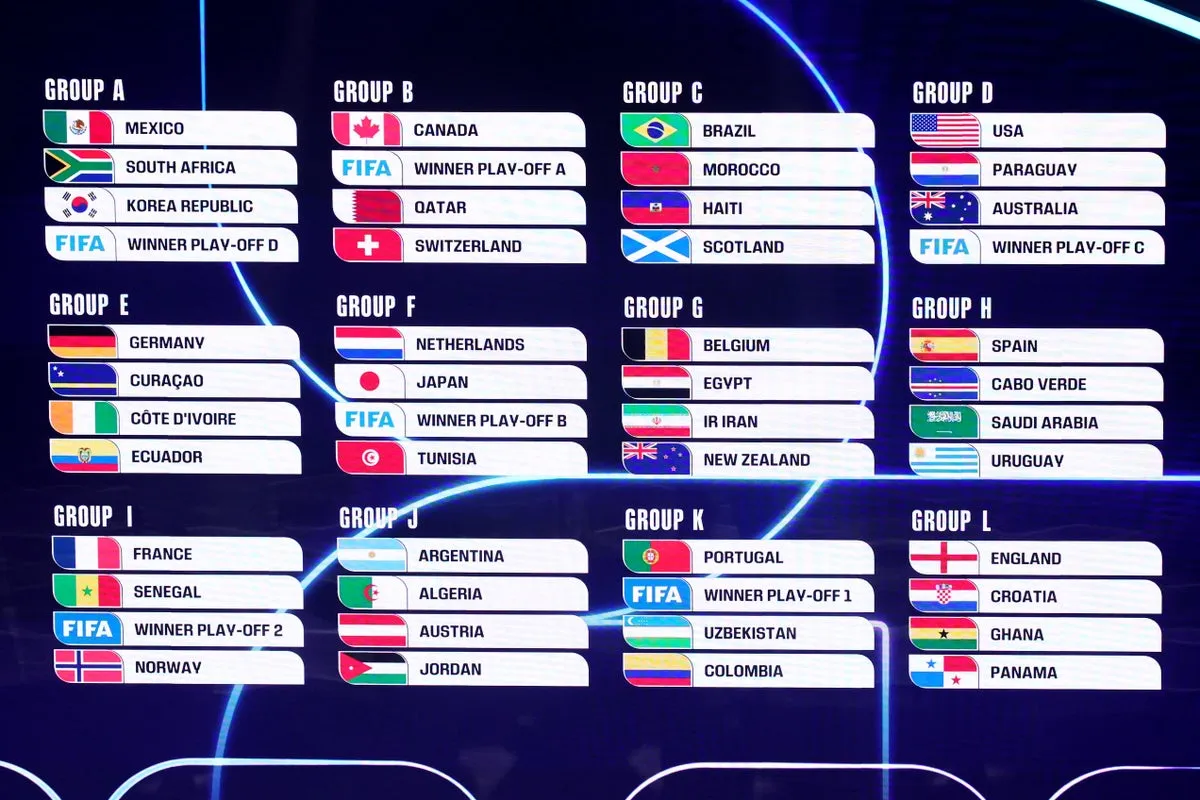
World Cup Fixtures: 2026 Tournament Overview
Who is involved
Before the announcement of the 2026 World Cup fixtures, expectations were set around a traditional tournament format that had been in place for decades. The previous World Cups featured 32 teams, and the anticipation was that the 2026 event would follow a similar structure, albeit with minor adjustments. However, the decisive moment came when FIFA confirmed that the tournament would expand to include 48 teams for the first time, fundamentally altering the landscape of the competition.
This significant change means that the 2026 World Cup will feature a total of 104 matches, a considerable increase from previous tournaments. The tournament is scheduled to kick off on June 11, 2026, with the opening match set to take place at the iconic Estadio Azteca in Mexico City, where Mexico will face South Africa. This match marks the beginning of a month-long celebration of soccer across North America, culminating in the final at MetLife Stadium in New Jersey on July 19, 2026.
The hosting responsibilities will be shared among three nations: the USA will host 78 matches, while Mexico and Canada will each host 13 matches. This distribution not only highlights the collaborative effort among the host nations but also emphasizes the scale of the event, with matches being played in 16 stadiums across the three countries. Each of the 12 groups will consist of four teams, with the top two teams from each group and the eight best third-placed teams advancing to the knockout stage.
For teams like England, drawn in Group L alongside Croatia, Ghana, and Panama, the fixtures present both opportunities and challenges. Similarly, Scotland will face Brazil, Morocco, and Haiti in Group C, making for a competitive environment. The expanded format allows for a greater diversity of teams, including nations like Curacao and Uzbekistan, which have historically had limited exposure on the world stage.
Experts suggest that the inclusion of 48 teams will not only enhance the competitive nature of the tournament but also provide a platform for emerging football nations to showcase their talent. This shift is expected to increase global viewership and engagement, as fans from a broader range of countries will have a stake in the tournament. The expansion is also seen as a strategic move by FIFA to grow the sport’s popularity in regions where soccer is still developing.
The 2026 World Cup fixtures reflect a significant evolution in the tournament’s structure, moving towards a more inclusive and expansive format. This change is not without its challenges, as logistical considerations and scheduling complexities will need to be addressed. However, the excitement surrounding the event is palpable, with fans eagerly anticipating the chance to witness their national teams compete on such a grand stage.
As the tournament approaches, the focus will shift to the preparations of the host countries and the participating teams. Details remain unconfirmed regarding specific match timings and ticketing information, but the overall framework is set. The 2026 World Cup promises to be a landmark event in the history of soccer, with its fixtures serving as a testament to the sport’s growing global appeal.